Creating a home office that is both relaxing and productive can greatly improve your work-from-home experience. Whether you’re setting up a new space or enhancing an existing one, the right environment helps you focus, reduces stress, and supports your well-being. Here are some practical tips for designing a home office that invites calm and encourages efficient work.
Choose the Ideal Location
The first step is selecting where in your home your office will be. Ideally, pick a quiet spot away from distractions such as noisy streets or busy household areas.
– Natural light: Position your desk near a window if possible. Natural light not only brightens the space but also boosts mood and alertness.
– Privacy: If you share your home, try to find a room with a door to limit interruptions.
– Space: Ensure there’s enough room for your desk, chair, and storage without feeling cramped.
Invest in Comfortable Furniture
Comfortable, ergonomic furniture is essential for preventing physical strain during long work hours.
– Chair: Choose an adjustable chair with good lumbar support to keep your posture healthy.
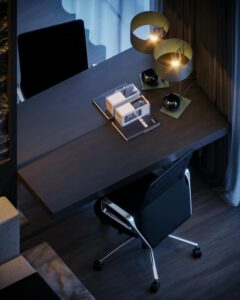
– Desk: Opt for a desk with enough surface area for your computer, paperwork, and accessories. Sit-stand desks are worth considering for flexibility.
– Accessories: Use a keyboard tray, monitor risers, or footrests to support a neutral posture and reduce fatigue.
Organise Your Workspace Effectively
A tidy and organised workspace helps minimise distractions and makes it easier to focus.
– Declutter regularly: Keep only the essentials on your desk to avoid visual chaos.
– Storage solutions: Use shelves, drawers, and organisers to store supplies neatly.
– Cable management: Use clips or sleeves to keep cords organised and out of the way.
Personalise Your Office
Adding personal touches makes your workspace more inviting and uplifting.
– Plants: Indoor plants improve air quality and add a calming natural element.
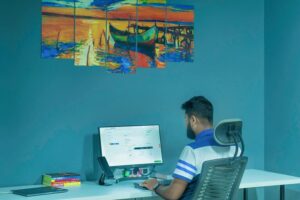
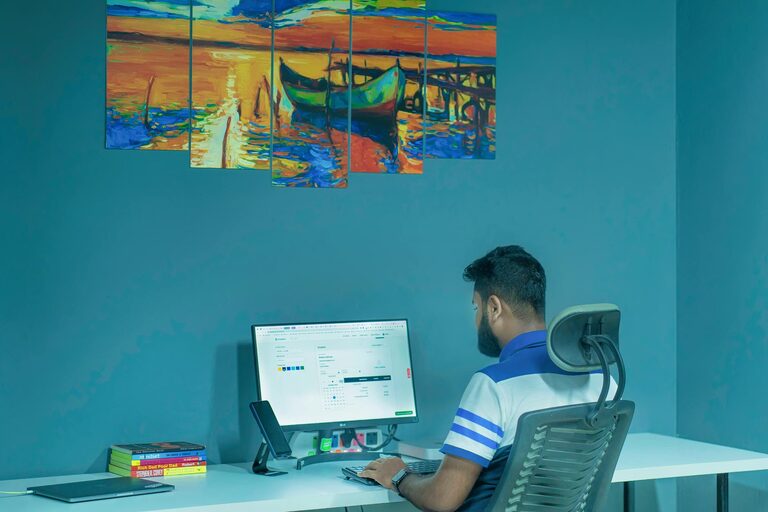
– Artwork: Hang pictures or prints that inspire you or bring you joy.
– Lighting: Include a combination of overhead and task lighting, plus perhaps some soft lamps, to adjust the ambience depending on your needs.
Create a Calming Atmosphere
A relaxing environment reduces stress and helps maintain focus.
– Colours: Choose soothing colours like soft blues, greens, or neutral tones. Avoid overly bright or harsh colours that may be distracting.
– Scent: Consider using essential oils or scented candles with lavender or citrus for a pleasant smell.
– Sound: Soft background music or white noise can help mask disruptive noises and improve concentration.
Set Clear Boundaries and Routines
Maintaining a work-life balance is crucial when working from home.
– Working hours: Establish clear start and finish times to avoid overworking.
– Breaks: Schedule regular breaks to rest your eyes, stretch, and recharge.
– Work-only zone: Use your office exclusively for work to help mentally separate your professional and personal life.
Utilise Technology Wisely
Technology can enhance productivity but also be a source of distraction if unmanaged.
– Devices: Invest in reliable technology that supports your work efficiently.
– Apps: Use productivity and organisation apps like calendars, to-do lists, and focus timers.
– Limit distractions: Turn off unnecessary notifications and set specific times to check emails or messages.
Keep Your Workspace Clean and Well-Maintained
A clean office feels more welcoming and helps sustain productivity.
– Daily tidying: Spend a few minutes each day clearing your desk.
– Deep clean: Regularly clean surfaces, keyboard, and equipment to create a healthy environment.
– Air quality: Open windows when possible and consider air purifiers if needed.
Prioritise Natural Movement
To avoid stiffness and fatigue, add movement into your working day.
– Stretching: Perform simple stretches every hour to relieve tension.
– Walks: Take short walks during breaks or lunch to refresh your mind.
– Active sitting: Consider using a balance ball chair or a standing desk to vary your posture.
—
By applying these tips, you can design a home office that supports your productivity while also helping you feel calm and comfortable. A well-considered workspace plays a key role in making working from home enjoyable and sustainable. Start small, make adjustments as you go, and create a space that truly works for you.